Attack on the French Fleet at Mers-el-Kébir
Promise at DawnThe Attack on the French Fleet at Mers-el-Kébir is the turning point that confronts the narrator with a bitter contradiction: British forces have sunk French naval units, yet Britain remains the destination from which he hopes to continue fighting. Recalled during his escape from North Africa, the news transforms a hazardous journey toward the Allies into a test of allegiance. His anger is real, but so is his recognition that the attack does not alter the immediate importance of Britain’s continuing the war.
The escape to Gibraltar
The event enters the memoir at the end of an improvised escape. In Casablanca, the narrator and two other flying-school trainees, Forsans and Daligot, are trying to reach England. They find the harbor guarded by gendarmes and see no Polish uniforms in the streets; the last British ship carrying Polish troops seems to have departed. Their determination falters as they stand beneath a gas lamp, unsure whether effort can overcome circumstance. A Polish corporal then appears with news that the cargo ship Oakrest is due to sail at midnight with Polish troops from North Africa. He has come ashore to buy provisions. The three trainees use Polish clothing and the narrator’s shouted orders to get past the harbor guards and aboard. They travel in a coal bunker, imagining future victories. Their arrival in Gibraltar is therefore not the end of the escape, but the moment when its hoped-for destination is overtaken by news of the attack.
The news and its immediate effect
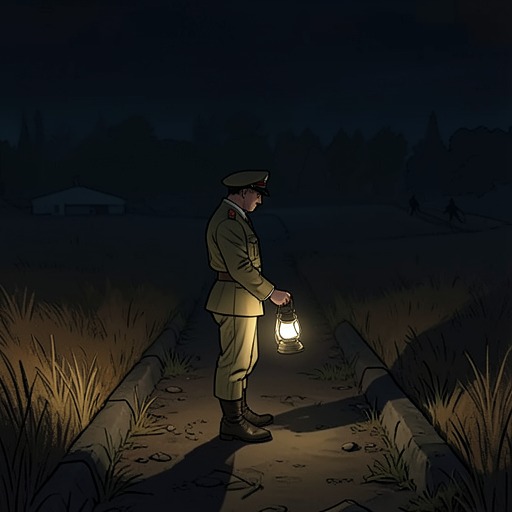
At Gibraltar, they witness the return of the British fleet after its action at Mers-el-Kébir, where it has sunk what the narrator describes as the finest French naval units. The news strikes the group as a betrayal by the country they have been trying to reach. Until then, their confidence had rested on the prospect of joining the struggle alongside Britain; the attack makes that prospect appear morally compromised even as it remains strategically necessary. The narrator gives this shock a grotesque emblem: he imagines Totoche, the god of Stupidity, standing in the harbor with the cap of a British admiral and laughing. The image turns the political contradiction into a vision of absurdity. The French have been harmed by a power whose help they need, and the laughter suggests how senseless the situation appears to him in that moment. His first thoughts turn to his mother in Nice, whom he imagines setting out to protest at the British Consulate. The private bond with his mother and his attachment to France converge in an imagined act of public indignation.
Anger, reconsideration, and the French flag
The narrator initially cannot bear to remain aboard an English ship. Seeing a destroyer flying the French tricolor, he leaves the Oakrest and swims toward it. In the water, the shock gives way to thoughts of suicide and vengeance against Admiral Somerville, whom he associates with the attack. These are described as impulses arising in the extremity of the moment, not as actions carried out. As he swims, he grows calmer and reassesses what the attack means for his choices. He concludes that Britain’s blow against France is inexcusable, but also that it demonstrates Britain’s determination to continue the war. That distinction changes the direction of the scene: anger at the British does not make him abandon his aim of reaching England. Near the French destroyer, he dismisses his imagined vengeance with a gesture and continues toward the ship. The tricolor draws him in, but the decision that follows is not a simple rejection of Britain; it is a determination to reach the fight despite the injury done by the power leading it. A sergeant on deck receives him without surprise and explains that the destroyer is bound for England with twelve Air Force sergeants joining Charles de Gaulle. They share condemnation of the British action, yet agree that the English intention to continue the war matters most for the time being. The narrator is invited to remain aboard and help with potato duties. He declines, preferring to continue toward England rather than take that passage. His decision preserves the central tension of the episode: he can condemn the attack while still judging the continuation of the war to be the urgent priority.
Aftermath and remembered losses
The narrator ultimately makes the voyage from Gibraltar to Glasgow aboard a British ship, a journey lasting seventeen days. The attack’s consequences travel with him: among the French flyers who gather in Glasgow, the memory of Mers-el-Kébir is still so strong that they withdraw silently to their tents while Scottish pipers perform a welcome march. The Scots continue playing in the empty park. The scene makes the political rupture visible as a refusal of ceremony, without erasing the hospitality being offered. The narrator recalls that only three of the fifty French airmen there survived the war; those who flew in the ensuing months fought across the skies of England, France, Russia, and Africa and together accounted for 150 enemy aircraft before they too were killed. Their fate broadens the event’s significance beyond the immediate outrage at Gibraltar. The attack becomes part of the memory of a small, exposed group whose members continue to fight despite losses, divided loyalties, and the uneasy welcome of allies. In the memoir, its decisive consequence is not a change of destination but a change in the emotional terms of arrival: England remains necessary, while trust and uncomplicated gratitude do not.